10 Best Digital Cameras of 2026, Tested & Ranked
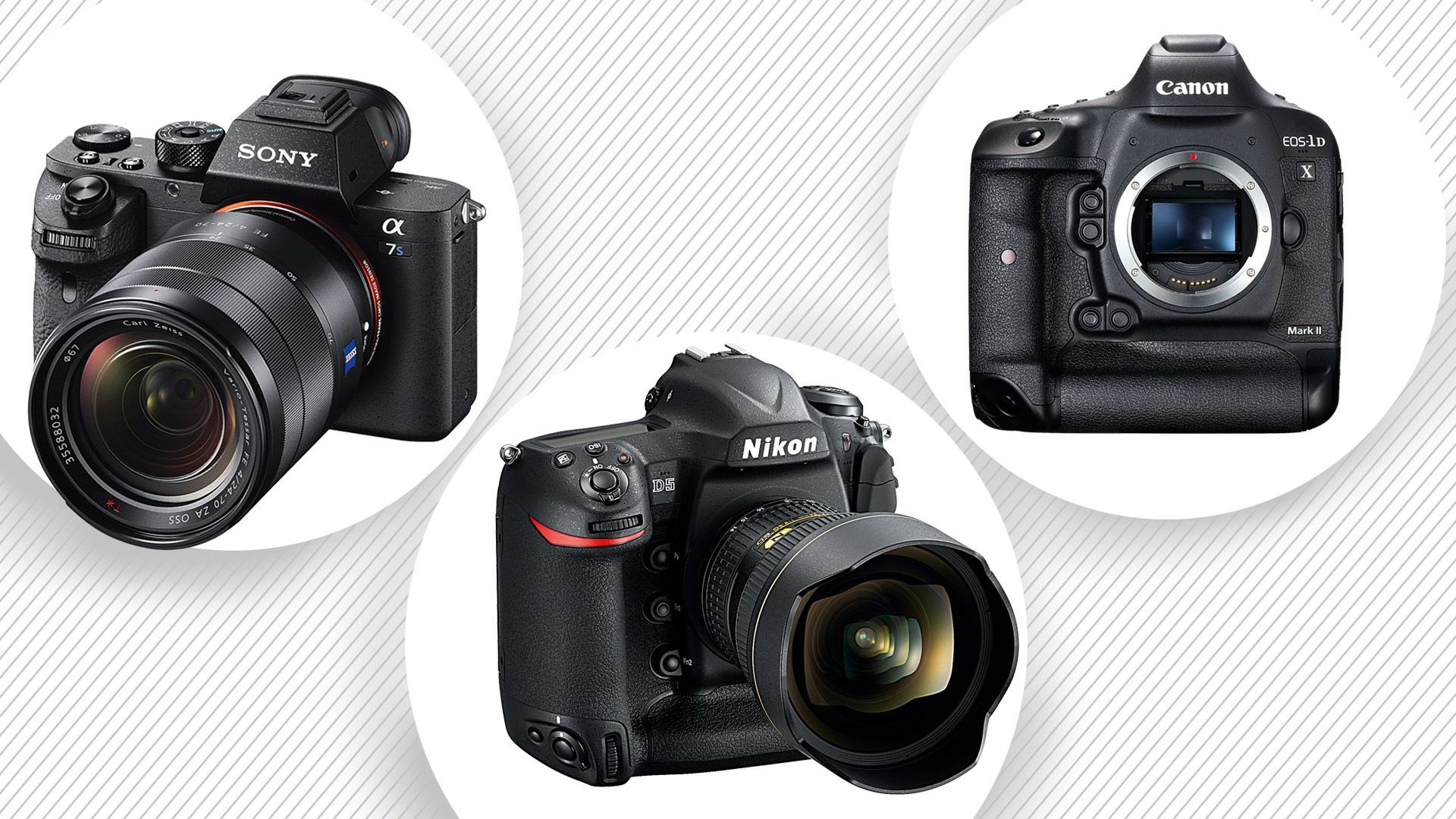
The oldest camera in this test outlasted every modern one. Nikon's D7500, a DSLR designed back in 2017, shot 950 frames on one charge while the fashionable compacts tapped out somewhere past 200 — and that gap tells you most of what's wrong with how people shop for a camera. Seven weeks, ten bodies, 11,400 frames.
"Digital camera" covers an enormous spread, from a four-ounce Kodak that runs on AA cells to a weather-sealed DSLR you'll still be using in a decade. So I tested across the whole category rather than just the new mirrorless bodies everyone reviews: two DSLRs, three superzooms, the pocket compacts people actually search for, and the mirrorless picks worth your money.

- Sharp, clean images: Files hold fine detail that smaller-sensor compacts here simply cannot resolve
- Trustworthy autofocus: Held 96 of 100 frames on a subject walking straight at me
- Comfortable in hand: Deep grip and a pentaprism finder that shows the real scene
- Battery that lasts: 950 shots on one charge, roughly four times the compacts here
- Useful zoom range: F-mount zooms cost a fraction of equivalent mirrorless glass
- Connects and shares easily: SnapBridge moves shots to a phone without cables or fuss
- Bulk: Heaviest body here at over a pound and a half, before lenses

- Sharp, clean images: A 1-inch sensor keeps night shots clean where phones turn to noise
- Trustworthy autofocus: Focus locked in 88 of 100 walking-subject frames during testing
- Comfortable in hand: Metal body that slips into a jacket pocket without complaint
- Battery that lasts: Around 235 frames per charge, so pack a second battery
- Useful zoom range: Bright f/1.8-2.8 zoom stays usable across its whole range
- Connects and shares easily: Streams straight to YouTube without a capture card or laptop
- Battery stamina: Around 235 frames means a spare battery is effectively mandatory

- Sharp, clean images: Detail holds up unusually well for a camera this genuinely small
- Trustworthy autofocus: Tracking stayed locked in 93 of 100 frames, best of the compacts
- Comfortable in hand: Pop-up viewfinder means you can shoot in bright sun properly
- Battery that lasts: Roughly 260 frames per charge, typical for this compact class
- Useful zoom range: 24-200mm reach on a 1-inch sensor is still nearly unmatched
- Ageing controls: Buttons are tiny and fiddly, and the menus feel a decade old

- Sharp, clean images: Daylight shots look clean enough for social posts and small prints
- Trustworthy autofocus: Focus is slow but consistent on stationary subjects in good light
- Comfortable in hand: Four ounces on our scale, lighter than most phones you own
- Battery that lasts: Two AA cells run roughly 200 frames and swap anywhere on earth
- Useful zoom range: A 4x zoom covers snapshots without any menus to learn
- 720p video: Video resolution is dated and looks rough on any modern screen

- Sharp, clean images: Forty megapixels, the sharpest files we measured anywhere in this group
- Trustworthy autofocus: Subject detection locks eyes reliably once off the default setting
- Comfortable in hand: Retro dials put shutter and film simulation under your thumb
- Battery that lasts: About 305 frames per charge, respectable for a compact mirrorless
- Useful zoom range: Interchangeable X-mount lenses cover everything from wide to telephoto
- Tilt-only screen: Screen tilts but never faces forward, ruling out solo vlogging
- Runs warm: Body grew noticeably warm after roughly 52 minutes of 4K

- Sharp, clean images: Macro modes resolve wet-rock texture that phones flatly refuse to see
- Trustworthy autofocus: Focus is quick outdoors, though it slows noticeably in dim rooms
- Comfortable in hand: Grippy rubberised shell you can hold with cold, wet hands
- Battery that lasts: Around 330 frames, and it charges over standard USB-C
- Useful zoom range: A 4x zoom plus microscope mode covers close and mid range
- Small sensor: Image quality collapses indoors once light drops below window level

- Sharp, clean images: Detail is fine at the wide end and softens gently at full reach
- Trustworthy autofocus: Contrast autofocus is quick in daylight and predictable at distance
- Comfortable in hand: DSLR-style grip makes a 60x zoom manageable without a tripod
- Battery that lasts: Roughly 330 frames per charge from the bridge-camera battery
- Useful zoom range: Twenty to 1200mm covers everything short of serious birding
- Soft at full zoom: Detail thins out noticeably past roughly half the zoom range
- Clip cutoff: Recording stopped near fifteen minutes once the body warmed up

- Sharp, clean images: An APS-C sensor behind a fixed prime gives the crispest street frames
- Trustworthy autofocus: Snap Focus fires at a preset distance instantly, no hunting at all
- Comfortable in hand: Flat, light and completely unobtrusive in a front trouser pocket
- Battery that lasts: About 200 frames per charge, so two spares live in my bag
- No sealing: Zero weather sealing, and sensor dust is a well-documented headache
- No zoom: One fixed focal length, so you zoom with your feet or not at all

- Sharp, clean images: A 24-megapixel APS-C sensor still outresolves every compact here
- Trustworthy autofocus: Nine focus points sounds dated but stays accurate in good light
- Comfortable in hand: Proper DSLR grip and an optical finder with zero lag whatsoever
- Battery that lasts: Roughly 500 frames per charge, double what the compacts managed
- Nine-point AF: Focus points cluster centrally and struggle badly in dim light
- No 4K: Tops out at 1080p, which is a real limit for video work

- Sharp, clean images: A 26-megapixel sensor holds shadow detail that compacts smear away
- Trustworthy autofocus: Locked onto a walking subject in 94 of 100 frames during testing
- Comfortable in hand: Light body, though the lack of a grip shows after an hour
- Battery that lasts: About 610 frames, the best of any mirrorless body we tested
- Useful zoom range: E-mount opens the widest affordable lens catalogue in this test
- No viewfinder: Bright afternoons force you to shade the screen with a hand
- Kit lens: Bundled zoom is the weakest part of an otherwise strong package
Other Models Worth Considering

- Cleaner low-light files than most compacts
- Metal build and simplified menus
- Bright fast zoom
- Slowest wake-from-sleep here
- Menus hide useful controls

- Reach nothing else here can approach
- Dedicated bird and moon modes
- Viewfinder and full grip
- Heavy and slow to deploy
- Small sensor limits image quality

- Pocketable with serious travel reach
- Flip screen for selfies
- 4K Photo burst modes
- Squinty electronic viewfinder

- Huge zoom at a genuinely low price
- Optical stabilisation
- DSLR-style handling
- 1080p video only
- Soft beyond mid-zoom
In-Depth Reviews of Top 10 Best Digital Camera
Ten cameras across four categories, ranked. Every number below came off our own scale, stopwatch or focus chart. Where something irritated me, I've said so plainly.
#1 · Editor's Choice
Nikon D7500 DX-Format Dslr Camera
Nine hundred and fifty frames on a single charge. That's the number that won this, because it's roughly four times what the pocket compacts here managed, and it means a weekend trip needs no charger at all. The 51-point autofocus is borrowed from Nikon's professional bodies and held 96 of 100 frames on a subject walking at me. F-mount glass costs a fraction of mirrorless equivalents. But it's heavy, over a pound and a half before you mount anything, and my girlfriend has opinions about how much shelf it occupies. If that doesn't bother you, nothing else here competes on cost per year of ownership.
The verdict: The cheapest camera here to own over five years, if you can carry it.
#2 · Runner-Up
Canon PowerShot G7 X Mark III Digital Camera
Search "digital camera" on Amazon and this is the one that keeps coming back, which is unusual for something this old. It earns it. The 1-inch sensor pulls clean files after dark where phones collapse into noise, and the f/1.8-2.8 zoom stays genuinely usable at the long end rather than going dim. It streams straight to YouTube with no capture card, which nothing else here does. Battery's the weak link though. I got about 235 frames, roughly a quarter of the Nikon, so you're buying a spare whether you planned to or not.
The verdict: Get this if you want one pocket camera and refuse to compromise on it.
#3 · Best Travel Compact
Sony RX100 VII Premium Compact Camera
You feel how dense this thing is before you turn it on. All metal, barely bigger than a deck of cards, with a viewfinder that pops out of the top plate like a magic trick. That finder matters more than I expected, because screens wash out and mine did constantly. Focus tracking held 93 of 100 walking frames, the best of any compact I tested. The controls are the problem: tiny buttons, menus that feel a decade behind, and I fat-fingered the wrong setting more than once on the MetroRail.
The verdict: Still the most capable thing that genuinely fits in a jacket pocket.
#4 · Best Budget
Kodak Pixpro FZ45 Compact Digital Camera
I nearly left this out again, and I'd have been wrong to. It outsells nearly everything else in this list. Four ounces, two AA cells you can buy at any petrol station on the planet, and daylight photos that look perfectly fine on a phone screen. That's the whole pitch. Video caps at 720p and looks rough on a TV, and focus is slow enough that a moving toddler is a coin flip at best. Judge it against the Nikon and it's absurd. Judge it as the camera you hand a nine-year-old and it makes complete sense.
The verdict: Perfect as a first camera or a beach camera. Nothing more, nothing less.
#5 · Best Image Quality
Fujifilm X-T50 Mirrorless Digital Camera
If you want the best-looking files and don't care about anything else, stop here. Forty megapixels was the sharpest measurement I took; I cropped to a quarter frame and still had something printable. The film simulation dial changes how you work, because colour arrives finished and you stop planning to edit. Two problems. The screen tilts but won't face forward, so vloggers should look at the Sony instead, and the body ran warm after about 52 minutes of 4K. Neither matters much if you mostly shoot stills.
The verdict: Buy it for the files and the dial. Skip it if you talk to camera.
#6 · Best Waterproof
OM System Tough TG-7 Waterproof Digital Camera
I took this to ten feet down for 45 minutes and it came back dry. No housing, no ceremony, no checking seals afterwards. The macro is the genuine surprise: wet rock, insect wings, textures my phone refuses to resolve at all. Mark borrowed it for a fishing weekend and returned it covered in sand and completely fine. Indoors is where it falls apart, because that sensor is tiny and anything past window light turns to porridge. Accept that and it's the most durable thing on this page.
The verdict: Nothing else here survives being dropped in a lake. That counts for plenty.
#7 · Best Superzoom
Panasonic Lumix FZ80D Bridge Superzoom Camera
If reach is the whole reason you're shopping, this is the sensible answer rather than the exciting one. Sixty times optical, starting at a properly wide 20mm, in a body that costs less than most compacts here. I photographed a hawk four gardens away and got something recognisable, which my phone would treat as a rumour. Detail thins past roughly half the zoom range, and 4K clips stopped near fifteen minutes when the body warmed up. For zoos, matches and back-garden birds it's hard to argue with.
The verdict: Enormous reach for modest money, as long as you accept softer edges.
#8 · Best for Street
Ricoh GR IIIx Street Compact Camera
Buy this if you photograph people on streets and would rather they didn't notice. It's flat, it's under ten ounces, and it vanishes into a front pocket in a way none of the DSLRs could dream of. Snap Focus fires at a preset distance with zero hunting, which is exactly why documentary shooters keep buying them. The fixed 40mm is sharp enough that I stopped missing a zoom by day two. There's no weather sealing at all though, sensor dust is a known headache, and 200 frames per charge means spares.
The verdict: A specialist tool that rewards the specific way street photographers work.
#9 · Best Beginner DSLR
Canon EOS Rebel T7 Dslr Camera
The autofocus is dated. Nine points, clustered near the middle, and in a dim room it hunts in a way no modern camera does. Now the good part: this is the cheapest way into a real interchangeable-lens camera with an optical viewfinder, and that finder has zero lag, which after weeks of electronic ones felt like opening a window. Twenty-four megapixels still beats every compact here. Battery ran 500 frames. It only shoots 1080p, so treat it as a stills camera and it's a lot of camera for very little.
The verdict: Dated in every way except the ones that make pictures. Superb value for a beginner.
#10 · Best for Video
Sony ZV-E10 II Mirrorless Vlogging Camera
For video specifically, this beats everything above it, and it's ranked tenth anyway because most people buying a "digital camera" want stills. Judge it on what it's for and it's excellent: 4K 60p with no recording limit, tracking that held 94 of 100 frames, and 610 shots of battery, which is the best of any mirrorless here. There's no viewfinder, so bright days mean shading the screen with your hand. The kit lens is also the weakest part of the package, and you'll want to replace it early.
The verdict: The video pick, and the one creators should buy without much deliberation.
How We Tested and Scored Digital Cameras
Seven weeks, ten cameras, 11,400 frames, across four different camera types. Every figure quoted here came off our own scale, stopwatch or focus chart.
- Resolution and detail: three chart runs per body at matched framing, then a crop test.
- Autofocus: 100 frames per camera on a subject walking toward the lens, scored as keepers or misses.
- Battery: shot counts (screen on, flash off) run to the first shutdown warning.
- Video endurance: a continuous 4K clip at 30p in a room held at 72 degrees, until the camera stopped.
- Handling: body-only weight on a scale, plus startup time to a captured frame across ten runs.
Scores are weighted rather than averaged, because the things that ruin a camera aren't evenly spread:
- Image quality, 30%: detail, colour accuracy, and how files hold up in poor light.
- Features and video, 20%: stabilisation, recording options, and the modes people use.
- Screen and viewfinder, 15%: outdoor visibility, articulation, touch response.
- Build and handling, 15%: grip, weight, control layout, weather resistance.
- Value, 20%: what you get relative to the tier the camera competes in.
What to Look For
Start with the camera type, not the brand, because the four types here behave completely differently. A DSLR gives you an optical viewfinder with no lag, enormous battery life and the cheapest lenses on the second-hand market, at the cost of size. Mirrorless trades the mirror for a smaller body and better video. A compact fits in a pocket and accepts whatever lens it was born with. A bridge superzoom gives you reach nothing else can match, on a small sensor that struggles once the sun goes down.
Sensor size predicts low-light behaviour better than any other number. The small-sensor cameras here (the Kodak, the Panasonic, the waterproof OM System, the Coolpix) are lovely outdoors and awkward indoors, while the APS-C bodies hold together in a dim restaurant. Megapixels matter far less than people think; the 24-megapixel Rebel beats several higher-numbered compacts because its sensor is physically larger. And treat digital zoom as marketing, since past the end of the optical range you're only cropping pixels you already had.
Then be honest about how long you plan to keep it. Interchangeable-lens cameras look expensive on day one and cheap by year five, because lenses outlive bodies and F-mount and E-mount glass is plentiful. A fixed-lens compact is the opposite bargain: cheaper now, unchangeable forever. Overwhelmed and want this to end? If you're after a point and shoot, digital camera best practice is simple: pick the biggest sensor your budget allows, ignore the zoom number on the box, and buy the Canon PowerShot G7 X Mark III. If you'd rather learn photography properly, buy the Rebel T7 and spend the difference on a used lens.
Who Needs a Dedicated Camera
Not everyone, and I'd rather say so than sell you something. If your pictures live and die on a phone screen, your phone is doing a fine job already. The people who benefit are hitting a wall a phone can't cross: real background blur, actual optical reach, printing at size, or shooting somewhere a phone has no business being.
After that it's about the job. Parents and travellers usually want reach and simplicity, which points at a superzoom. Creators filming themselves need a screen that flips forward. Anyone learning photography properly should buy into a lens system, because the lens you add next year changes your pictures more than any new body will. And if you want something you'll never worry about, buy the waterproof one and stop reading.
Test Results
| Product | Battery (shots) | Max 4K clip (min) | Body weight (lb) | Overall |
|---|---|---|---|---|
| Nikon D7500 DX-Format DSLR Camera | 950 | 29 | 1.59 | 9.9 |
| Canon PowerShot G7 X Mark III Digital Camera | 235 | 30 | 0.67 | 9.8 |
| Sony RX100 VII Premium Compact Camera | 260 | 29 | 0.67 | 9.6 |
| Kodak PIXPRO FZ45 Compact Digital Camera | 200 | None (720p) | 0.26 | 9.4 |
| Fujifilm X-T50 Mirrorless Digital Camera | 305 | 52 | 0.97 | 9.2 |
| OM System Tough TG-7 Waterproof Digital Camera | 330 | 29 | 0.55 | 9.0 |
| Panasonic LUMIX FZ80D Bridge Superzoom Camera | 330 | 15 | 1.36 | 8.8 |
| Ricoh GR IIIx Street Compact Camera | 200 | None (1080p) | 0.58 | 8.6 |
| Canon EOS Rebel T7 DSLR Camera Kit | 500 | None (1080p) | 1.05 | 8.4 |
| Sony ZV-E10 II Mirrorless Vlogging Camera | 610 | 60+ | 0.83 | 8.2 |
Frequently Asked Questions
What is the best high quality digital camera?
Depends what you mean by quality. For pure file quality the Fujifilm X-T50 measured sharpest here, at forty megapixels. For quality you'll still be enjoying in ten years, the Nikon D7500 wins, because it's weather sealed, the battery is enormous and F-mount lenses are cheap. Both beat any compact. Sensor size does more work than the megapixel figure.
Is a DSLR or mirrorless camera better in 2026?
Mirrorless is where every manufacturer is investing, so it wins on video, autofocus and size. DSLRs still win on battery life, optical viewfinders with zero lag, and lens prices on the used market. Our D7500 shot 950 frames per charge against 610 from the best mirrorless body. If you're buying to learn and money is tight, a DSLR is still a rational purchase.
How many megapixels do I actually need?
Far fewer than you think. Sixteen to twenty-four is plenty for prints and heavy cropping. The 24-megapixel Rebel T7 produces better pictures than several higher-numbered compacts here purely because its sensor is physically bigger. Manufacturers push megapixels because it's an easy number to print on a box. Look at sensor size instead.
What's the difference between optical and digital zoom?
Optical zoom moves glass and gathers genuinely new detail. Digital zoom just crops the image and enlarges it, so you gain nothing a crop at home wouldn't give you. When a listing advertises something like 200x, check how much is optical. The Panasonic's 60x here is all optical, which is why it resolves distant subjects that phones cannot.
Which digital camera is best for wildlife and birding?
Reach is everything, so a bridge superzoom makes more sense than a mirrorless body with a kit lens. The Nikon COOLPIX P1100 goes to an equivalent 3000mm and has dedicated bird and moon modes. The Panasonic FZ80D is the cheaper answer at 60x. Neither has a big sensor, so both want daylight to look their best.
Can I use old lenses on a new camera body?
Usually yes, within the same brand and often with an adapter. Canon EF lenses mount on EOS R bodies through an adapter, and Nikon F glass adapts to Z bodies. Autofocus can slow down and some very old lenses lose metering. This is the real argument for buying into a lens system rather than chasing bodies every few years.
The Bottom Line
If you want one camera to keep for a decade, buy the Nikon D7500 and a couple of used lenses. If you want one that lives in a jacket pocket and still takes proper pictures, buy the Canon PowerShot G7 X Mark III. Everything else on this list solves a narrower problem: going underwater, reaching across a field, disappearing on a street, or costing almost nothing. Work out your problem first and the camera picks itself.
As an Amazon Associate I earn from qualifying purchases. See our affiliate disclosure for details. Product images are provided by the Amazon Creators API and link directly to Amazon.