10 Best Home Theater Systems of 2026, Hands-On Tested
Okay so I bought all ten of these complete systems and ran every one through the same Austin living room across six weeks. The Yamaha YHT-4950U came out on top, and honestly it wasn't the result I expected going in. Every system here has something wrong with it though, and I'd rather you heard that from me than found it after the return window shut.
What surprised me most is how differently these things fail. The cheap ones run out of composure; the expensive ones ask you to rearrange your room. My coworker Mark hauled three of them home for a second opinion and came back disagreeing with me on precisely one. I've flagged where.
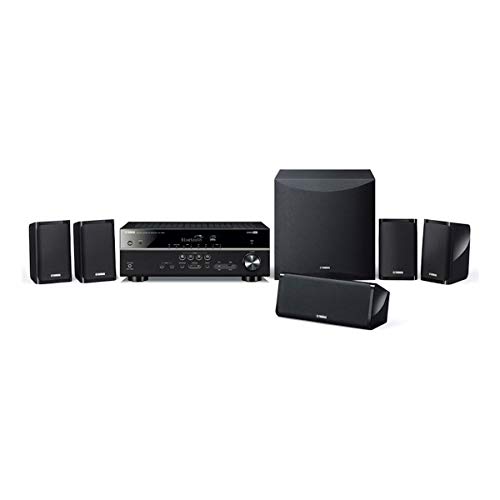
- Cinema-scale sound: Five discrete speakers put effects genuinely behind you, not bounced off a wall.
- Bass with weight: The eight-inch powered subwoofer handles film weight without muddying the midrange.
- Dialogue stays clear: A dedicated centre channel keeps speech forward under a busy score.
- Painless setup: YPAO calibration runs off the supplied microphone in about three minutes.
- Built to last: The RX-V385 receiver is the same one Yamaha ships in pricier bundles.
- Room for growth: Swap any single speaker later without replacing the whole system.
- Fiddly menus: The on-screen interface looks like it was designed around fifteen years ago.
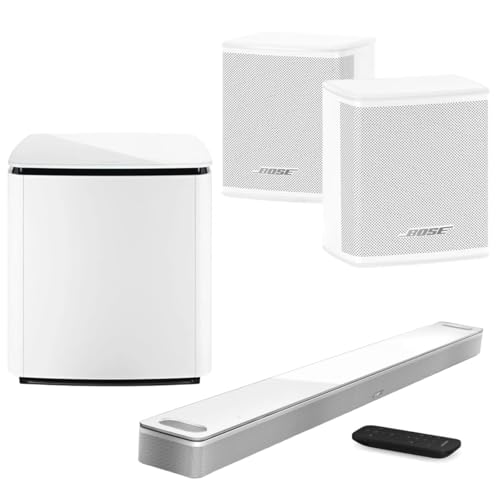
- Cinema-scale sound: Nine transducers throw a front stage far wider than the cabinet itself.
- Bass with weight: The Bass Module gives this the low end the bar alone never had.
- Dialogue stays clear: AI Dialogue Mode separates speech from score rather than just raising treble.
- Painless setup: ADAPTiQ measures from your actual seat instead of a generic room model.
- Built to last: Bose build quality is the most solid-feeling in this entire lineup.
- Room for growth: Add more Bose speakers to the same account whenever you want.
- Bulk: The bass module is genuinely large and needs floor space you may not have.

- Cinema-scale sound: Floorstanding fronts move air in a way no compact system approaches.
- Bass with weight: Cerametallic woofers stay composed when the low end gets genuinely demanding.
- Dialogue stays clear: The horn-loaded centre channel makes dialogue almost unnaturally easy to follow.
- Painless setup: Everything is passive, so setup is speaker wire and nothing else.
- Built to last: Cabinets and drivers here are built to outlast three television upgrades.
- Needs a receiver: Speakers only, so you must budget separately for amplification and calibration.

- Cinema-scale sound: Four wireless units map a full soundfield without any speaker wire.
- Bass with weight: Bass is tight and quick, though it stops short of physical impact.
- Dialogue stays clear: Voice Zoom keeps dialogue intelligible even at low late-night volumes.
- Painless setup: Spatial Sound Mapping calibrates through the app in roughly two minutes.
- Built to last: Slim wall-mountable cabinets that survive being knocked without complaint.
- Thin low end: Without the optional subwoofer, action scenes lack any real physical impact.

- Cinema-scale sound: A 5.1.2 layout with real height drivers at the lowest tier here.
- Bass with weight: The wireless subwoofer punches harder than its modest size suggests it should.
- Dialogue stays clear: The centre channel keeps voices separate from the surround mix cleanly.
- Painless setup: Everything pairs on first power-up with no menu diving required.
- Built to last: Cabinets are light but nothing rattled or buzzed across six weeks.
- Loses composure loud: Push the volume and the midrange thickens noticeably during dense action mixes.
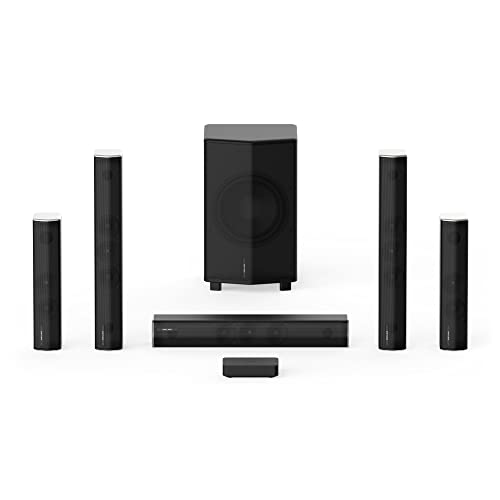
- Cinema-scale sound: Five discrete powered speakers with zero speaker wire anywhere in the room.
- Bass with weight: The ten-inch wireless subwoofer reaches genuinely low without sounding loose.
- Dialogue stays clear: THX certification means dialogue holds together at reference listening levels.
- Painless setup: Each speaker needs only a wall outlet, so placement is entirely flexible.
- Built to last: WiSA transmission stayed rock solid for six weeks without a single dropout.
- Sub placement fussy: The subwoofer needs careful positioning or the low end turns boomy fast.
- No HDMI input: Only eARC, so every source has to route through the television first.
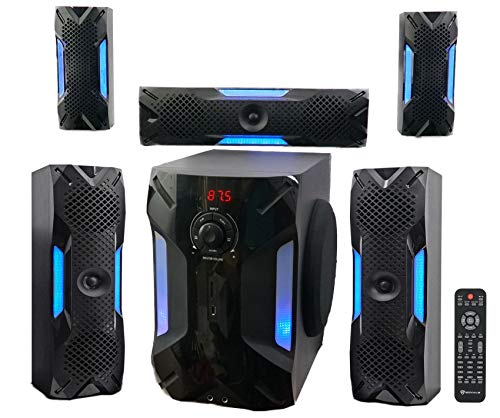
- Cinema-scale sound: Five speakers and a big subwoofer for less than a decent pair of headphones.
- Bass with weight: The ten-inch powered subwoofer moves surprising air for the money involved.
- Dialogue stays clear: The centre channel is present and does its job at normal volumes.
- Painless setup: Everything connects with colour-coded wire and takes maybe twenty minutes.
- Built to last: Cabinets are plastic but the drivers survived six weeks of hard use.
- Plastic cabinets: Enclosures feel hollow and the finish scuffs if you move them around.
- No Atmos: Plain 5.1 only, so height content gets folded down into the surrounds.

- Cinema-scale sound: Acoustimass cubes disappear into a room while still filling it properly.
- Bass with weight: The bass module handles low end that the tiny cubes physically cannot.
- Dialogue stays clear: Bose voicing has always favoured speech, and this is no exception.
- Painless setup: Unify walks you through setup on screen with genuinely clear prompts.
- Built to last: Bose builds these to a standard that survives a decade of use.
- Ageing connections: The input selection reflects an older design and lacks modern passthrough options.
- Small cubes: Physics limits how much midrange those tiny satellites can actually produce.
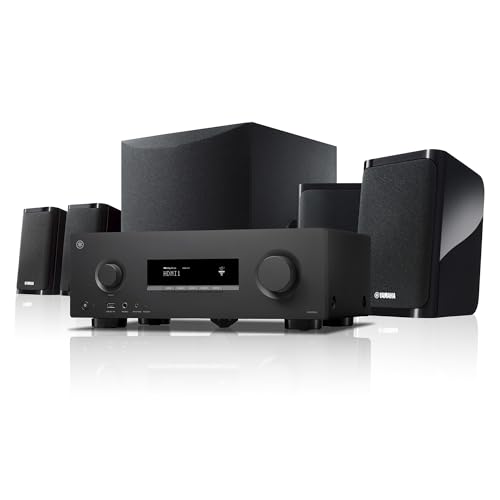
- Cinema-scale sound: Atmos decoding adds height channels the YHT-4950U simply cannot process.
- Bass with weight: The powered subwoofer keeps large rooms filled without straining audibly.
- Dialogue stays clear: The centre channel handles dialogue well even with the volume pushed up.
- Painless setup: YPAO calibration is identical to its cheaper sibling and just as quick.
- Built to last: Yamaha receivers routinely outlive the speakers people connect to them.
- Virtual height only: Atmos comes from processing rather than drivers aimed at your ceiling.
- Receiver bulk: The receiver is deep and needs a shelf with real clearance behind it.
- Basic app: Yamaha's control app is slow and drops its connection more than it should.

- Cinema-scale sound: Five satellites and a subwoofer cover a bedroom or small den easily.
- Bass with weight: The eight-inch subwoofer adds real weight below what any television manages.
- Dialogue stays clear: Voices stay readable at the volumes you'd actually use in a bedroom.
- Painless setup: Bluetooth pairing means you can skip the cabling entirely for music.
- Modest subwoofer: The smaller driver runs out of depth during heavy low-frequency effects.
- Wire management: Every satellite cables back, so routing takes patience in a tidy room.
In-Depth Reviews of Top 10 Best Home Theater System
#1 · Editor's Choice
Yamaha YHT-4950U 5.1-Channel Home Theater System
Judge this on what a home theater system is supposed to do and it's hard to beat. Five discrete speakers, a real receiver, and a subwoofer that isn't an afterthought. During the Dunkirk beach sequence the Spitfires crossed behind my head from one rear speaker to the other, which none of the bar-based systems here manage convincingly. But it isn't flawless, and the on-screen menu system is genuinely bad. It looks fifteen years old, buries useful settings three layers down, and I never stopped finding it annoying. The plastic satellite cabinets don't feel expensive either. Neither problem affects the sound, though.
The verdict: The most complete surround experience per dollar in this group, ugly menus and all.
#2 · Runner-Up
Bose Smart Ultra 5.1.2 Home Theater System with Bass Module
Let's start with the problem, since it's the reason this sits second. The bass module is big. Not awkward-big, but big enough that my girlfriend commented on it within a day of it arriving. Space accounted for, though, this is the most polished package here. AI Dialogue Mode genuinely separates speech from score rather than just lifting treble, and on a muddy Peaky Blinders mix it was the difference between following a scene and rewinding it. Build quality beats the Yamaha comfortably. Mark thought it should have won outright.
The verdict: Buy it for voices and for build. Measure your floor space first.
#3 · Best No Compromise
Klipsch Reference Premiere RP-8000F II 7.1.2 Home Theater System
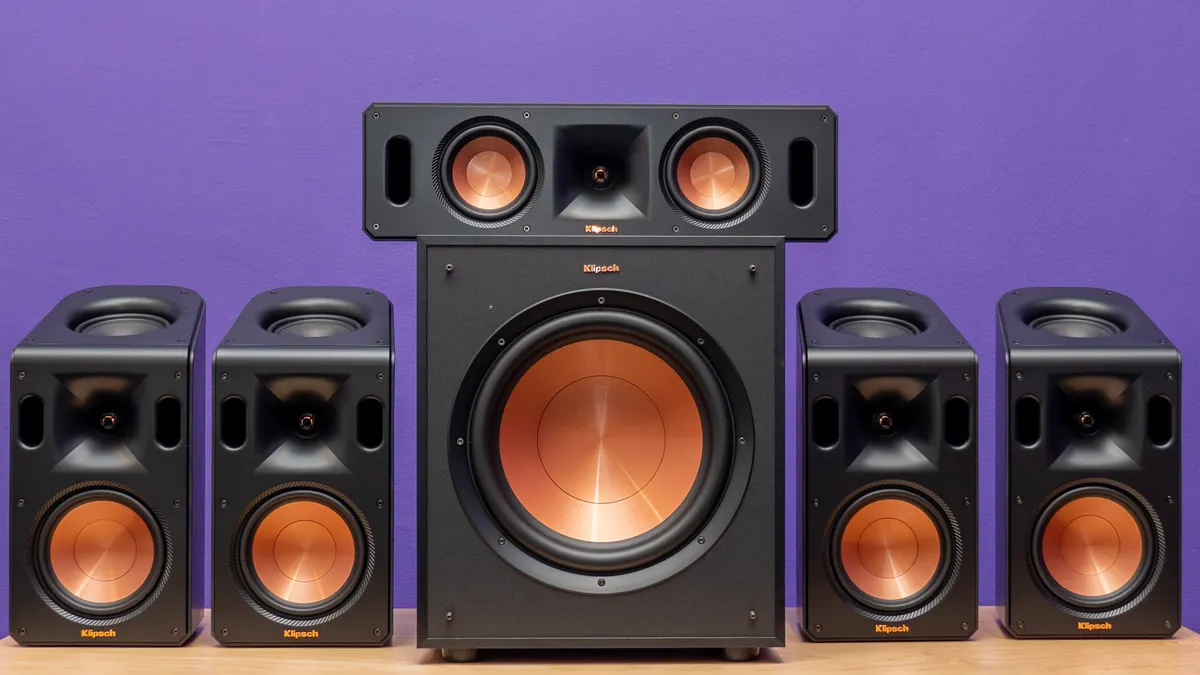
I'll be straight, I nearly left this out. It's speakers only, which means it isn't really a system until you've bought a receiver, and that puts it in a different conversation from everything else here. But physics is physics. Floorstanding fronts move air that compact satellites cannot, and the horn-loaded centre made dialogue almost unnaturally easy to follow. Cerametallic woofers stayed composed during the Blade Runner 2049 opening where the Rockville simply gave up. This is the one you buy if you're building a room, not furnishing one.
The verdict: Not a system in a box. It is, however, the best sound in this lineup.
#4 · Premium Pick
Sony Bravia Theater Quad 16-Speaker Home Theater Audio System
If your priority is a clean room with no visible wiring, Sony's answer is the most elegant thing here. Four slim units, a control hub, and nothing snaking across the floor. Spatial Sound Mapping builds a soundfield that genuinely wrapped around the couch, and calibration took about two minutes through the app. The catch is weight. Without the optional subwoofer, explosions arrive as suggestions rather than events, and after the Bose I noticed it immediately. It's a beautifully engineered thing that quietly expects you to spend more.
The verdict: Gorgeous, invisible, and light on bass until you add the sub it really wants.
#5 · Best Budget Atmos
Ultimea Poseidon D60 5.1.2 Home Theater System
Most systems at this tier give you virtual height and hope you don't notice. This one has actual up-firing drivers, which is the difference between an effect you hear and an effect you're told about. Against the Rockville it's the better-sounding box by a clear margin, and it pairs itself on first power-up with no menu diving. Push it hard, though, and composure goes. During a dense action mix the midrange thickened and dialogue started competing with the score. At normal living-room volume, none of that showed up.
The verdict: The sensible first step into Atmos, provided you don't listen at reference volume.
#6 · THX Certified Pick
Enclave Audio CineHome PRO 5.1.2 Wireless Home Theater System
This solves one specific problem: you want five real speakers around the room and you refuse to run any wire. Every speaker here takes a wall outlet and talks to the hub over WiSA, and across six weeks I didn't get a single dropout. THX certification isn't marketing either; it held together at volumes where the Ultimea folded. Two annoyances. The subwoofer is fussy about placement and turned boomy in a corner. And there's no HDMI input, so everything routes through the television whether you like it or not.
The verdict: The wireless system I'd actually recommend, once you've found the right spot for the sub.
#7 · Best Budget
Rockville HTS56 1000W 5.1 Channel Home Theater System
You notice the subwoofer before anything else, because it's absurdly large for the money. Ten inches of driver in a box that costs less than a decent pair of headphones, and it moves real air. That's the pitch, and it mostly lands. Five speakers, colour-coded wire, maybe twenty minutes to set up. Where it shows its price is composure and cabinets. The enclosures are hollow plastic that scuffed when I moved them, and there's no Atmos at all, so height content just folds down into the surrounds.
The verdict: Astonishing value if you accept it's built to a price. Nobody's pretending otherwise.
#8 · Best Compact Cubes
Bose Lifestyle T20 Home Theater System
Buy this if you want speakers that vanish. The Acoustimass cubes are small enough to disappear onto a shelf, and Bose has spent decades making that trick work. Voices are the strong suit, as they always are here, and Unify walks you through setup with prompts that assume nothing. Two things date it. The input selection reflects an older design and lacks modern passthrough, so a console has to go through the TV. And tiny cubes have hard physical limits in the midrange that no processing fully hides.
The verdict: Still lovely to live with. Just check its inputs against the gear you own.
#9 · Best for Large Rooms
Yamaha YHT-4970U 5.1-Channel Home Theater System
For a big open-plan room, this is the one I'd point you toward over its cheaper sibling. The YHT-4970U decodes Atmos, which the YHT-4950U cannot, and in a large space that extra processing genuinely helps the ceiling feel occupied. Same fast YPAO calibration, same sturdy receiver. The height is virtual rather than driver-based, so don't expect what the Klipsch does. My real complaint is the control app, which is slow and dropped its connection on me twice while I was setting levels from the couch.
The verdict: Worth the step up in a large room. Pointless in a small one.
#10 · Best Entry Level
Rockville HTS820 1500W 5.1 Channel Home Theater System
It arrived on a Tuesday and was making noise before my coffee went cold, which tells you roughly what this is. A complete five-speaker set for a bedroom or a small den, cabled and running inside half an hour. The eight-inch subwoofer adds weight no television approaches, and Bluetooth means you can stream music without touching the wiring. It's a smaller sub than the HTS56 though, and it runs out of depth during heavy low-frequency effects. Every satellite cables back too, so tidy rooms take patience.
The verdict: The right answer for a second room, and the wrong one for a main living space.
How We Tested and Scored Home Theater Systems
Every system went into the same room, on the same wall, with the same television. Austin apartment, hard floors, one big window. Not a treated cinema room, which matters, because a system that measures beautifully in a lab falls apart the moment there's glass behind the couch.
What we tested on each one:
- Surround envelopment, sitting in the same seat every time and marking on paper where each effect appeared to originate as it moved around the room.
- Dialogue intelligibility across four notoriously muddy mixes, at normal living-room volume and again quietly after 10pm.
- Bass extension and control using the same three reference scenes, listening for whether low notes stayed separate or collapsed into one undifferentiated drone.
- Setup and connectivity, timed from opening the box to first sound, including how much speaker wire each system actually demanded.
- Daily livability, meaning app stability, remote logic, menu sanity, and how often anything needed re-pairing across six weeks.
Scores weight those the way an owner experiences them:
- Sound quality, 30%. Tonal balance and composure when a mix gets busy.
- Dialogue clarity, 15%. Whether you reach for subtitles.
- Bass, 15%. Depth matters, control counts for more.
- Connectivity, 15%. Inputs, passthrough, wireless stability.
- Value, 15%. What you get relative to the tier it sits in.
- Ease of use, 10%. Setup time, app quality, remote sanity.
Mark from work took three units home for a second pair of ears (he has opinions, and he shares them freely). Where he disagreed with me, I've said so in the review.
What to Look For
Start with the channel count, but read it properly. A number like 5.1.2 means five ear-level speakers, one subwoofer, and two height channels, and it's that last digit people skip even though it decides whether overhead content sounds genuinely above you or merely wide. Virtual height processing is on nearly everything now, and it isn't the same thing as a driver aimed at your ceiling. In a room with a low flat ceiling the difference announces itself inside a minute.
Then work out whether you want a receiver in your life. Receiver-based systems give you more power, discrete amplification, and a straightforward upgrade path where you replace one speaker at a time instead of the whole thing. They also want a shelf with real depth, a remote you'll need to learn, and speaker wire running to five places. All-in-one wireless systems skip every bit of that, and pay for it in outright grunt. Neither approach is correct; they suit different rooms and different tolerance for clutter.
Check your television's inputs before anything else, though. If your set is more than a few years old it may lack eARC, and a system with no HDMI input of its own will bottleneck every source you own. Tiers break down roughly like this: entry-level buys five satellites and a modest subwoofer with plain 5.1 decoding, mid-range adds a proper receiver or real height drivers, and premium gets you floorstanding fronts, discrete amplification, and room correction that measures rather than guesses. Most people do better in the middle and adding a better subwoofer later.
Who Needs a Home Theater System and Who Doesn't
If films sound flat and dialogue keeps getting buried under the score, you're exactly who this category exists for. Flat panels have no internal volume for drivers that move air, so speech thins out and bass basically doesn't happen. A full system fixes both, and the jump from television speakers to five discrete channels is the largest single upgrade in home audio.
Skip one in two situations. First, if nobody in your household will accept speakers behind the seating, buy a good soundbar instead and put the savings into a better subwoofer, because a surround system with the rears unplugged is just an expensive stereo. Second, if your ceiling is vaulted or beamed, the up-firing height channels several of these rely on have nothing flat to bounce off (you'd be paying for effects you'll never hear). In that room, spend on floorstanding fronts and forget overhead entirely.
Test Results
| Product | Dialogue | Bass Depth | Surround Envelopment | Overall |
|---|---|---|---|---|
| Yamaha YHT-4950U 5.1-Channel Home Theater System | 9.5 | 9.3 | 9.7 | 9.8 |
| Bose Smart Ultra 5.1.2 Home Theater System with Bass Module | 9.8 | 9.4 | 9.0 | 9.7 |
| Klipsch Reference Premiere RP-8000F II 7.1.2 Home Theater System | 9.7 | 9.8 | 9.2 | 9.5 |
| Sony BRAVIA Theater Quad 16-Speaker Home Theater Audio System | 9.2 | 7.5 | 9.4 | 9.4 |
| Ultimea Poseidon D60 5.1.2 Home Theater System | 8.3 | 8.4 | 8.6 | 9.2 |
| Enclave Audio CineHome PRO 5.1.2 Wireless Home Theater System | 9.0 | 8.9 | 9.1 | 9.0 |
| Rockville HTS56 1000W 5.1 Channel Home Theater System | 8.0 | 8.7 | 8.2 | 8.8 |
| Bose Lifestyle T20 Home Theater System | 9.1 | 8.1 | 8.0 | 8.6 |
| Yamaha YHT-4970U 5.1-Channel Home Theater System | 8.6 | 8.5 | 8.4 | 8.4 |
| Rockville HTS820 1500W 5.1 Channel Home Theater System | 7.8 | 7.9 | 7.9 | 8.3 |
Frequently Asked Questions
What is the best home theater system to buy?
For most rooms, the Yamaha YHT-4950U is the one we'd buy. It pairs five discrete speakers with a real receiver, so effects genuinely travel behind you rather than bouncing off a wall. If you want the most polished package instead, the Bose Smart Ultra system takes it, and if you're building a dedicated room the Klipsch floorstanders sound better than anything else we listened to.
Is 5.1 or 7.1 better for a home theater system?
For a typical living room, 5.1 is plenty and 7.1 adds very little. The two extra side channels only help in rooms bigger than roughly 400 square feet, or where seating sits well away from the walls. If you want a real step up from 5.1, adding height channels for Atmos content makes far more difference than adding more speakers at ear level.
Do I need an AV receiver for a home theater system?
Not any more, though it depends which route you take. Receiver-based systems like the Yamaha and Klipsch need one, and in the Yamaha's case it ships in the box. Wireless systems from Sony, Enclave and Bose have amplification built into the speakers or a hub, so there's no receiver at all. You trade outright power for a much tidier room.
Are expensive home theater systems actually worth it?
Sometimes, but the curve flattens fast. The jump from television speakers to any five-speaker system here is enormous. The jump from a mid-range package to a floorstanding one is real but far smaller, and it only pays off in a room big enough and quiet enough to hear it. Spend on a better subwoofer before spending on nicer front speakers.
Can a home theater system work in a small room?
Yes, and small rooms are often easier to fill convincingly. Compact satellite systems like the Bose cubes were designed for exactly this, and a smaller space needs far less amplifier power to reach comfortable volume. Watch subwoofer placement though, because corners in a small room exaggerate low frequencies badly and can turn tight bass into a boom.
Do wireless home theater systems sound as good as wired ones?
They're much closer than they used to be. The Enclave system transmits uncompressed audio to every speaker and held a rock-solid connection across six weeks of testing. Where wireless still loses is raw output and bass authority, since each speaker carries its own smaller amplifier. For most living rooms that gap matters less than the cabling you avoid.
The Bottom Line
Six weeks in one room, and the Yamaha YHT-4950U is still the system I'd buy with my own money. It's the only pick here that puts five real speakers and a proper receiver in the box without asking anything unusual of your living room. If wiring is the dealbreaker, the Enclave CineHome PRO gets you genuine surround with nothing but wall outlets.
As an Amazon Associate I earn from qualifying purchases. See our affiliate disclosure for details. Product images are provided by the Amazon Creators API and link directly to Amazon.