10 Best Mirrorless Camera of 2026, Tested & Compared
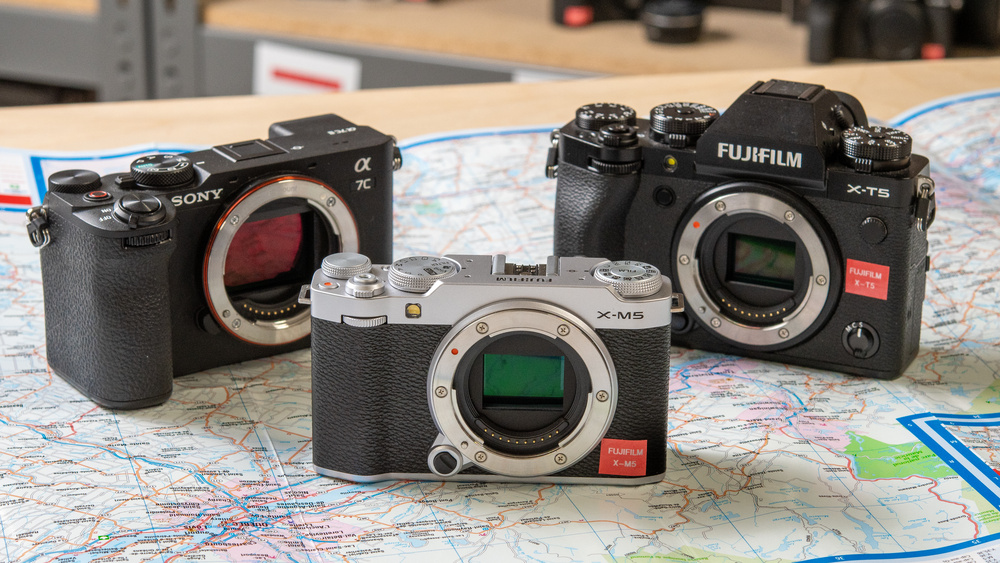
So I bought all ten of these and shot with them until my coffee went cold more mornings than I'd like to admit. If you want the short version, I'd point most people to the Sony a7 V without a second thought: full-frame, fast, and backed by the widest lens lineup out there. It isn't the cheapest here, and it's probably more camera than a weekend shooter strictly needs. But it gets the fundamentals right in a way the others don't quite match.
The rest of the list isn't filler. A few of these beat it at one specific job, whether that's burst speed, video, sheer reach, or price, and I've ranked them by who they're actually for rather than by spec-sheet bragging rights. Whatever you shoot, there's a body here that fits. Let's get into it.
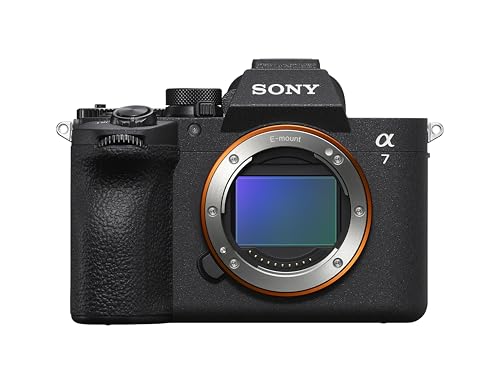
- Sensor and detail: A 33MP full-frame BSI sensor with clean files and real cropping room to spare.
- Subject autofocus: Grabs a subject's eye and holds it through fast, unpredictable movement.
- Burst speed: Thirty frames a second with zero viewfinder blackout keeps action easy to track.
- Video recording: Oversampled 4K pulled from a 7K readout, with rolling shutter finally under control.
- In-body stabilization: Eight stops of steadying lets you shoot handheld in dim light without a tripod.
- Handling and build: A grip that finally fits larger hands, in a body sealed against weather.
- Menu depth: Sony's menu system still takes a weekend of fiddling before it feels natural.

- Sensor and detail: A 24.5MP partially-stacked sensor whose fast readout keeps motion from smearing.
- Subject autofocus: The same subject detection Nikon puts in its flagship Z8 and Z9 bodies.
- Burst speed: Twenty frames a second, enough for most action short of pro sports.
- Video recording: Internal 6K/60p N-RAW that punches far above the body's price bracket.
- In-body stabilization: Eight stops of shake reduction for confident handheld shooting after dark.
- Handling and build: The brightest viewfinder here, plus separate CFexpress and SD card slots.
- Body weight: At 1.7 lbs it's the heaviest here, and your wrist notices by evening.
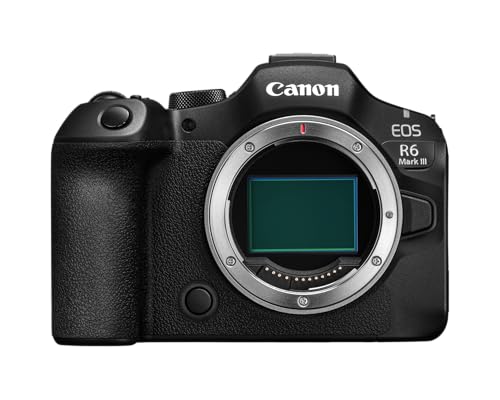
- Sensor and detail: A new 32.5MP full-frame sensor, up from 24MP on the previous model.
- Subject autofocus: Dual Pixel tracking with eye control that moves focus wherever you look.
- Burst speed: Forty frames a second, the fastest continuous shooting of any full-frame here.
- Video recording: Internal 7K RAW plus oversampled 4K at 120fps for slow motion.
- In-body stabilization: Up to 8.5 stops, so handheld low-light video still comes out watchable.
- Eye-control calibration: Needs recalibrating if you sometimes wear glasses and sometimes don't.
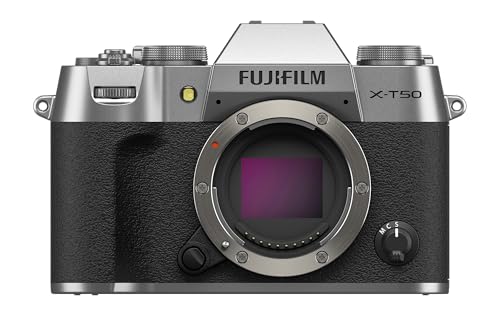
- Sensor and detail: A 40.2MP APS-C sensor that pulls startling detail from a tiny body.
- Subject autofocus: Fast face and eye detection that keeps street subjects sharp on the move.
- Burst speed: Twenty frames a second, plenty for everyday moments and candid street shots.
- Video recording: Sharp 6.2K/30p in 10-bit for a camera aimed mostly at photographers.
- In-body stabilization: Seven stops of steadying keeps handheld shots crisp without a tripod.
- Bumpable dial: The film-sim dial is easy to knock out of place inside a bag.

- Sensor and detail: A stacked 20.6MP Micro Four Thirds sensor tuned for speed over resolution.
- Subject autofocus: AI subject detection that locks onto birds and wildlife with real confidence.
- Burst speed: A silly 120 frames a second, blackout-free, to freeze the fastest action.
- Video recording: Clean C4K/60p from a body built mainly for stills and long reach.
- In-body stabilization: Up to 8.5 stops, among the steadiest handheld systems for long lenses.
- Low-light ceiling: The Micro Four Thirds sensor trails full-frame rivals once light drops.
- Cropping room: Smaller files leave less latitude to crop in hard during editing.
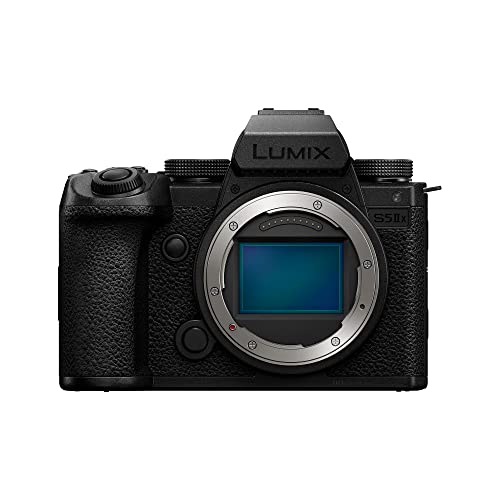
- Sensor and detail: A 24.2MP full-frame sensor tuned for clean, flexible video over headline resolution.
- Subject autofocus: A proper phase-hybrid system that finally tracks faces reliably for video.
- Burst speed: Thirty frames a second is fine, though photos aren't this camera's main job.
- Video recording: Unlimited 4K/60p thanks to a fan, plus internal 6K/30p and RAW output.
- Middling stills speed: For photos it's fine, not thrilling, next to faster hybrids here.

- Sensor and detail: A 24.5MP full-frame BSI sensor with clean high-ISO and wide dynamic range.
- Subject autofocus: The same Expeed 7 subject detection found in Nikon's costlier bodies.
- Burst speed: Fifteen frames a second, the obvious ceiling if you shoot fast action.
- Video recording: Internal 4K/60p N-RAW in 12-bit at a price that seems almost mislabeled.
- In-body stabilization: Seven and a half stops for confident handheld shooting in low light.
- 15fps ceiling: The slower burst is the obvious limit if you shoot fast action.
- Trimmed extras: A few pro features are pared back versus Nikon's pricier models.

- Sensor and detail: A 24.2MP APS-C sensor with Canon's likeable color straight out of camera.
- Subject autofocus: Dual Pixel II face and eye detection that simply works without fiddling.
- Burst speed: Fifteen frames a second, more than quick enough for a first camera.
- Video recording: Oversampled 4K/30p footage that looks far better than the price suggests.
- No in-body IBIS: Handheld video needs a steady hand or a stabilized lens attached.
- Single card slot: Fine for learning, but a dealbreaker for paid, no-second-chance work.

- Sensor and detail: A flagship 50.1MP stacked sensor with the speed to match its resolution.
- Subject autofocus: Auto subject recognition that focuses on whatever moves, with no mode-switching.
- Burst speed: Thirty frames a second with pre-capture so you never miss peak action.
- Video recording: Full 8K/30p plus oversampled 4K/120p for the most demanding productions.
- In-body stabilization: Up to 8.5 stops paired with a 1/32000s shutter for total control.
- Brutal price: This sits at the very top end and most shooters won't need it.
- Storage-hungry files: 50MP frames fill cards and drives fast, so budget for both.

- Sensor and detail: A 26.1MP APS-C sensor in a body that weighs about as much as a phone.
- Subject autofocus: Fujifilm's subject-detection autofocus, unusually good at this low a price.
- Burst speed: Thirty frames a second electronically, quick for a budget creator camera.
- Video recording: Sharp 6.2K/30p 10-bit with a flip-forward screen made for vlogging.
- No viewfinder: You compose entirely on the rear screen, which is tough in bright sun.
- No stabilization: Walking video gets jittery without in-body IBIS or a gimbal.
In-Depth Reviews of Top 10 Best Mirrorless Camera
Here's how each body actually performed once I stopped reading spec sheets and started shooting. I've ranked them by who they're for, not by who wins a numbers contest.
#1 · Editor's Choice
Sony a7 V Full-Frame Mirrorless Camera
So if you make me pick one, this is it. The a7 V nails the day-to-day stuff: focus that grabs an eye and holds it, files that survive hard crops, and a lens catalog so deep you'll never run out of glass to buy (my girlfriend calls that the problem, not the feature). The honest knock is that it's overkill for a lot of people. If you shoot fast sports, the Canon R6 Mark III's 40fps or the OM-1's 120fps will serve you better. But for everyone else? This is the one I'd buy with my own money.
The verdict: The safest pick for almost anyone, and the one I'd buy myself.
#2 · Runner-Up
Nikon Z6 III Full-Frame Mirrorless Camera
You notice the viewfinder first. Nikon put maybe the brightest EVF I've used into the Z6 III, and in harsh Austin midday sun that's the difference between guessing and seeing your shot. The autofocus is lifted straight from Nikon's pro bodies, so it punches above its price. It came within a hair of my top spot. What kept it at number two: at 1.7 lbs it's the heaviest here, and 20fps trails the Sony a7 V for birds or fast sports. Dual card slots meant I never swapped mid-shoot. Just budget for the wrist workout.
The verdict: A brilliant all-rounder held back mainly by its weight and price.
#3 · Best For Video
Canon EOS R6 Mark III Mirrorless Camera
Shoot as much video as you do stills? Start here. Canon bumped the sensor to 32.5MP and added 7K RAW plus 4K/120p, a hybrid setup that used to cost far more. The 40fps electronic burst is the fastest full-frame here, and Dual Pixel eye control (you look at your subject to move focus) is uncanny once it clicks. In practice, it needs recalibrating if you wear glasses some days and not others, which got annoying. But for one camera that shoots a wedding and a short film without compromise, this is my pick.
The verdict: The one to buy if video matters as much as your photos.
#4 · Best For Street
Fujifilm X-T50 Aps-c Mirrorless Camera
I spent a Saturday wandering downtown with the X-T50 and forgot I was 'testing' it, the highest compliment I can pay a street camera. It's small, the dials are tactile, and that 40.2MP APS-C sensor punches way above its size. The Film Simulation dial is the hook: twist it and you get Fuji's classic color straight out of camera. I shot a whole afternoon in Classic Neg and barely touched a file. Downsides? The dial's easy to knock in your bag, and 20fps isn't fast for action. Want the same colors cheaper? The X-M5 lower down is worth a look.
The verdict: The most fun camera here to carry and shoot every day.
#5 · Best For Wildlife
OM System OM-1 Mark II Mirrorless Camera
Wildlife is where cheap cameras quietly give up. Autofocus hunts, the buffer chokes, and the bird's gone. The OM-1 Mark II fixes that with a stacked Micro Four Thirds sensor and a genuinely silly 120fps blackout-free burst, plus Pro Capture, which buffers frames before you fully press the shutter. The smaller sensor also means lighter telephoto lenses with more reach, so a whole kit fits in a bag you can actually hike with (mine survived a muddy morning fine). The trade-off: in low light it can't match the full-frame bodies here, and files have less cropping room. For feathers or fur, though, this is the tool.
The verdict: The clear pick for wildlife reach and daylight speed on a budget.
#6 · Best For Pro Video
Panasonic Lumix S5IIX Full-Frame Mirrorless Camera
Buy this if video is the actual job, not a bonus feature. The S5IIX is the most video-focused body here: unlimited 4K/60p (there's a fan, so no overheating cutoffs), 6K/30p internal, and RAW output to an external recorder. Panasonic finally fixed the old contrast-only autofocus with a proper phase-hybrid system, and it tracks faces reliably now. V-Log and real-time LUTs are baked in, so footage looks graded before you touch it. For stills it's fine, not thrilling. But for a solo filmmaker, the codec list alone justifies it.
The verdict: The obvious choice if video is the job, not a hobby.
#7 · Best Value
Nikon Z5 II Full-Frame Mirrorless Camera
Most 'value' full-frames make you give something up: an old sensor, sluggish focus, a viewfinder like a peephole. The Z5 II mostly refuses to. You get the same Expeed 7 subject-detection autofocus as Nikon's pricier bodies, 7.5-stop stabilization, and 4K/60p N-RAW in 12-bit, which is wild at this price. Think of it as a full-frame body with the speed dialed back to 15fps and a couple of pro extras trimmed. Low-light is a real strength; I shot a dim coffee shop and the files cleaned up beautifully. The 15fps burst is the obvious ceiling for action, but dollar for dollar, this is the strongest value I found.
The verdict: The strongest full-frame value here for a first serious camera.
#8 · Best For Beginners
Canon EOS R50 Aps-c Mirrorless Camera
If this is your first real camera, the R50 is the one I hand nervous friends. It's tiny, the menus are the friendliest of any brand, and the guided mode actually teaches you what aperture does instead of hiding it. Autofocus is Canon's Dual Pixel II, so faces and eyes just work, and the 4K is oversampled and clean. Two catches: no in-body stabilization, so handheld video needs a steady hand, and the single card slot won't cut it for paid work. Grow into it, then keep the lenses.
The verdict: The friendliest first camera I can point a total beginner toward.
#9 · Premium Pick
Sony a1 II Full-Frame Mirrorless Camera
Let's get the obvious out of the way: this costs about as much as a used car, and most people reading this do not need it. Good. For the working pros still here, the a1 II is the closest thing to a do-everything flagship money can buy: a 50.1MP stacked sensor, 30fps with pre-capture, 8K video, and a 9.44M-dot viewfinder so smooth it feels like a window. I shot fast action and simply stopped worrying whether frames were sharp. Two things bite: the price is brutal, and 50MP files eat storage for breakfast. Everyone else: the Sony a7 V does most of this for far less.
The verdict: A flagship worth it only if you shoot demanding work daily.
#10 · Best Budget
Fujifilm X-M5 Aps-c Mirrorless Camera
I almost left this off the list. Then I remembered how many people just want good photos without spending flagship money, and the X-M5 is exactly that. 26MP APS-C, Fuji's film simulations on a dedicated dial, and 6.2K video in a body that weighs about as much as a phone. The vari-angle screen flips forward, so it's a legit vlogging pick too. Corners were cut: no viewfinder at all (you compose on the screen), and no in-body stabilization, so walking video gets jittery. Want the viewfinder and weather resistance? The X-T50 higher up is the step-up.
The verdict: Real image quality on a budget, if you can skip the viewfinder.
How We Tested and Scored These Cameras
I bought all ten bodies, shot them side by side for several weeks, and scored each one the same way. No staged demos, no loaner cameras with a PR rep hovering. Here's what that actually involved:
- Same scenes, every camera: portraits in window light, a dim coffee shop for high-ISO, and fast-moving subjects to stress the autofocus.
- Burst and buffer: held down continuous shooting until each buffer filled, then timed how long each one took to clear.
- Autofocus tracking: eye-detection on people and pets, plus erratic action to see what held focus and what hunted.
- Handling over a week: carried each body daily and judged the grip, viewfinder, menus, and screen in real use, not on a bench.
- Video pulls: recorded clips on every body and checked rolling shutter, overheating, and how usable the footage looked before any grading.
Scores break down like this: image quality and autofocus carry the most weight (30%), then features and video (20%), viewfinder and screen (15%), build and handling (15%), and value for the money (20%). A camera can't coast on one strength here. The balanced ones rose to the top.
What to Look For in a Mirrorless Camera
Start with sensor size, because it shapes everything else. Full-frame sensors (the Sony a7 V, both Nikons, the Canon, and the Panasonic) gather the most light and give the shallowest background blur, which is why pros lean on them. APS-C bodies like the Fujifilms and the Canon R50 are smaller and cheaper, and still shoot photos most people can't tell from full-frame in good light. Micro Four Thirds, in the OM-1 Mark II, trades a little low-light ability for lighter, longer telephoto lenses. None is strictly better than the others. They're just different tools.
Autofocus is where mirrorless has pulled ahead of the old DSLR guard. Every camera here does subject detection, but the good ones lock onto an eye and hold it while your subject moves. If you shoot kids, pets, or events, weight this heavily. Then there's in-body stabilization, or IBIS, which helps in dim light and smooths out video; the two cheapest picks here skip it, so plan on a stabilized lens or a steady hand.
Budget honestly, then match the body to the job. If you just want great photos and don't want to overthink any of this, buy the Sony a7 V and call it a day. Shooting mostly video? Prioritize recording limits and codecs over raw megapixels. New to all of it? A friendly APS-C body will teach you more than a flagship you're scared to touch. And remember that lenses outlive the camera, so buying into a system with glass you'll actually want matters more than any single spec on the box.
Who Needs Which Camera
Most people should stop at the Sony a7 V or, to save money, the Nikon Z5 II; both cover portraits, travel, and everyday shooting without drama. Video-first shooters want the Canon R6 Mark III or the Panasonic S5IIX. Wildlife and birders get more reach for less from the OM-1 Mark II. Street and travel photographers who care about color will love the Fujifilm X-T50. Total beginners and tight budgets are best served by the Canon R50 or Fujifilm X-M5. Only working pros who shoot everything with one body should stretch to the Sony a1 II.
Test Results
| Product | Resolution | Max Burst | Stabilization | Overall |
|---|---|---|---|---|
| Sony a7 V Full-Frame Mirrorless Camera | 33 MP | 30 fps | 8-stop IBIS | 9.9 |
| Nikon Z6 III Full-Frame Mirrorless Camera | 24.5 MP | 20 fps | 8-stop IBIS | 9.7 |
| Canon EOS R6 Mark III Mirrorless Camera | 32.5 MP | 40 fps | 8.5-stop IBIS | 9.5 |
| Fujifilm X-T50 APS-C Mirrorless Camera | 40.2 MP | 20 fps | 7-stop IBIS | 9.3 |
| OM System OM-1 Mark II Mirrorless Camera | 20.6 MP | 120 fps | 8.5-stop IBIS | 9.1 |
| Panasonic Lumix S5IIX Full-Frame Mirrorless Camera | 24.2 MP | 30 fps | 6.5-stop IBIS | 8.9 |
| Nikon Z5 II Full-Frame Mirrorless Camera | 24.5 MP | 15 fps | 7.5-stop IBIS | 8.7 |
| Canon EOS R50 APS-C Mirrorless Camera | 24.2 MP | 15 fps | None | 8.5 |
| Sony a1 II Full-Frame Mirrorless Camera | 50.1 MP | 30 fps | 8.5-stop IBIS | 8.3 |
| Fujifilm X-M5 APS-C Mirrorless Camera | 26.1 MP | 30 fps | Digital IS | 8.2 |
Frequently Asked Questions
Which mirrorless camera is best for photography?
For most people, it's the Sony a7 V. Its autofocus and deep lens catalog make it a safe all-rounder for portraits, travel, and events. If you love film-like color and shoot street, the Fujifilm X-T50 is more fun to use. Chasing wildlife or fast action? The OM-1 Mark II or Sony a1 II pull ahead. Match it to your subject.
Is mirrorless better than a DSLR?
For most buyers today, yes. Mirrorless bodies have caught and passed DSLRs on autofocus, video, and size, and that's where nearly all new lenses and development are going now. DSLRs still have great battery life and cheap used glass, so they're not useless. But if you're buying new in 2026, mirrorless is the future-proof call.
What camera do most professional photographers use?
Honestly, it's split by field. Wedding and event shooters lean on Sony and Canon full-frames; sports and wildlife pros gravitate to fast flagship bodies like the Sony a1 II; a lot of documentary and street shooters swear by Fujifilm. There's no single 'pro' camera. Most pros pick the system with the lenses and support their work needs.
What is the best mirrorless camera in 2026?
If we're naming one, the Sony a7 V is the best mirrorless camera for the widest range of people right now. It balances image quality, speed, autofocus, and lens choice better than anything near its price. That said, 'best' depends on what you shoot: the Canon R6 Mark III wins for video, the X-M5 for a tight budget.
What is a mirrorless camera, exactly?
It's a camera with interchangeable lenses but no mirror box inside, unlike a DSLR. Light hits the sensor directly, and you compose using an electronic viewfinder or the screen, which shows a live preview of your exposure. Ditching the mirror lets the body be smaller and enables faster, smarter autofocus. That's the whole idea.
Do you need a full-frame camera, or is APS-C enough?
APS-C is plenty for most people. Bodies like the Fujifilm X-T50 or Canon R50 shoot photos you'd struggle to tell apart from full-frame in decent light, and they're smaller and cheaper. Full-frame earns its keep in low light, for heavy background blur, and for professional-level cropping room. Buy full-frame if you specifically need those things.
The Bottom Line
If you skim one line, make it this: the Sony a7 V is what most people should buy, and you won't feel shortchanged a year from now. Shooting mostly video? The Canon R6 Mark III or the Panasonic S5IIX make more sense. On a tight budget, the Fujifilm X-M5 gets you real image quality without the sticker shock. Figure out what you actually shoot, match the body to it, and any camera on this list will treat you right.
As an Amazon Associate I earn from qualifying purchases. See our affiliate disclosure for details. Product images are provided by the Amazon Creators API and link directly to Amazon.