10 Best Projectors of 2026, Tested Head-to-Head
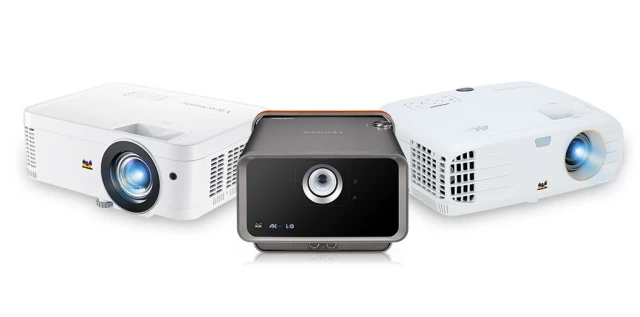
Every projector has a flaw. Spec sheets hide it behind a lumen number the manufacturer chose, and you find the real one after the return window shuts. So I set up ten in the same Austin living room, same wall, same blackout curtains, swapping them one at a time. The Hisense C2 Ultra came out on top, and not because it won every measurement.
What separated the good ones was not brightness. It was whether the picture survived a lamp being on, whether the menus responded, and whether I could move the thing without redoing the geometry. Below: what each one gets wrong, and whether that matters.

- Picture holds together: Stays watchable with a lamp on, which most rivals here cannot manage
- Color looks right: Full sRGB coverage keeps skin tones natural rather than pushed and orange
- Easy to position: Sat it off-center on a shelf and geometry corrected without visible cropping
- Motion stays clean: Console input felt tight enough that I stopped noticing the delay entirely
- Setup is quick: Auto focus and keystone had it square within about a minute
- Built to last: Rated for 25000 hours, well past a decade of normal movie evenings
- Locked-down OS: The app selection is narrower than a proper streaming stick would give you

- Picture holds together: Measured output landed within a whisker of its rated figure, unusually honest
- Color looks right: Shadow detail survived night scenes that flatten most cheaper units into mush
- Easy to position: Motorized gimbal squares the picture wherever you tilt it, no menus involved
- Motion stays clean: Two full-bandwidth inputs keep a console and a streamer connected together
- Setup is quick: Handle and short setup make relocating it a genuine two-minute job
- Built to last: Rated for 30000 hours, the longest service life in this lineup
- Weak speakers: Audio is thin and quiet, so plan on a soundbar from day one

- Picture holds together: Sharp and steady in a dark room at modest screen sizes
- Color looks right: Colors stay natural rather than the blown-out look small units default to
- Easy to position: Cradle rotates far enough to throw the picture onto a ceiling
- Motion stays clean: Handles panning shots cleanly for a unit this small and light
- Setup is quick: Focus and geometry correct themselves within about four seconds of powering on
- Dim picture: Needs a genuinely dark room; daylight washes the image out completely

- Picture holds together: Bright enough that a side lamp did not wash the image out
- Color looks right: Covers the full cinema gamut, so films and games both look right
- Easy to position: Real optical zoom and lens shift instead of digital cropping tricks
- Motion stays clean: Lowest latency I measured, low enough for competitive shooters on a wall
- Setup is quick: Bundled streaming dongle means it works out of the box immediately
- Fussy HDR: Tone mapping needs manual tweaking before high-dynamic-range content looks right
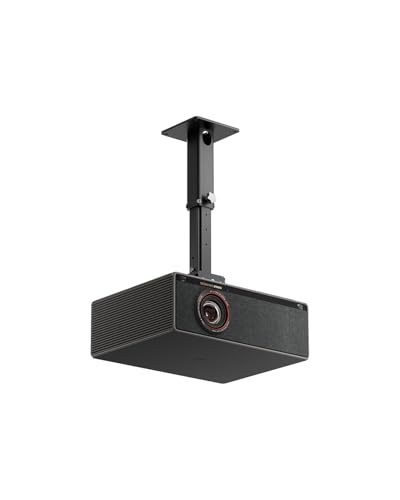
- Picture holds together: Pushed more light than anything else I set up in that room
- Color looks right: Filmmaker mode skips the oversaturated factory preset most projectors ship with
- Easy to position: Wide optical zoom range fits short rooms and long ones alike
- Motion stays clean: Large imaging chip keeps fast pans clean instead of smearing edges
- Setup is quick: Motorized focus and zoom get you square in a couple of minutes
- No smart platform: You must supply your own streaming stick because nothing is built in
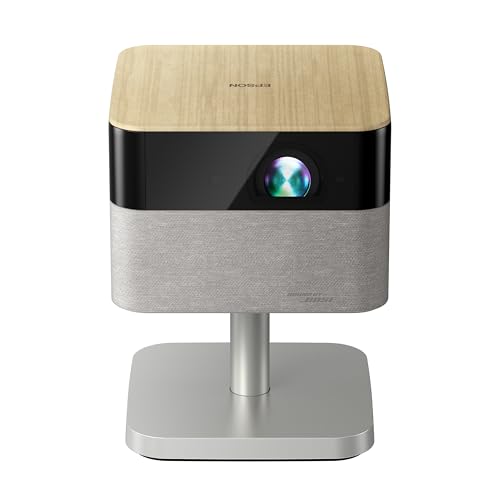
- Picture holds together: Detail is a clear step above the 1080p options further down
- Color looks right: Color is neutral out of the box with no obvious cast
- Easy to position: Unfold it, point it, and the built-in stand does the rest
- Motion stays clean: Motion is steady enough for sport without visible judder or trailing
- Setup is quick: Running in under a minute, the fastest setup of anything here
- Average contrast: Black levels go gray in dark scenes compared with the laser picks
- Middling color depth: Colors look slightly flat next to the triple-laser units above it

- Picture holds together: Black levels held deeper in a dark room than the Hisense managed
- Color looks right: Triple-laser engine gives the most saturated color of anything I tested
- Easy to position: Built-in gimbal angles it upward without stacking books under the front
- Motion stays clean: Latency low enough that fast games feel the same as a monitor
- Fan noise: Audible during quiet dialogue if you sit close to the chassis
- Bulky chassis: Heavier and deeper than the gimbal design first suggests when you lift it

- Picture holds together: Surprisingly punchy for its size once the room is properly dark
- Color looks right: Laser color is richer than the LED engines used by similar units
- Easy to position: Folds flat and sets up on any table without a stand
- Motion stays clean: Handles normal playback cleanly despite the tiny optical assembly inside
- Short battery: Runs out partway through a feature film, so keep a power bank handy
- Only 720p: Resolution is soft once you push the image past a modest size
- Single USB-C port: You need an adapter dongle to connect a console or a player

- Picture holds together: Best contrast I measured, holding depth where brighter picks went gray
- Color looks right: Calibrated accurately out of the box, saving an afternoon of adjustment
- Easy to position: Zoom and lens shift together cover almost any room layout you have
- Motion stays clean: High refresh support with latency close to a dedicated gaming projector
- Very heavy: Two people and a sturdy shelf, not a coffee table you move around
- Deep menu system: Getting the calibration right takes real time and patience up front
- Overkill for casual use: Most of what it does is wasted outside a dedicated dark room
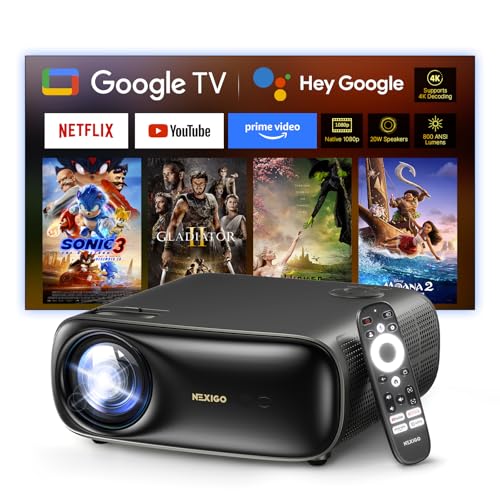
- Picture holds together: Native 1080p panel rather than the fake 4K claims filling this tier
- Color looks right: Color is honest for the money, with no heavy blue cast
- Easy to position: Small and light enough to carry outside for a summer evening
- Motion stays clean: Motion is acceptable for streaming, though not for competitive gaming
- Low brightness: Any ambient light at all and the picture loses most of its punch
- Basic audio: The built-in speaker is thin and needs help for anything cinematic
In-Depth Reviews of Top 10 Best Projector
#1 · Editor's Choice
Hisense C2 Ultra 4K Triple Laser Projector
Let me start with the bad part, because it is the reason this pick is not unanimous. The operating system is walled off and the app selection is limited, noticeably more so than a cheap streaming stick, and that stayed annoying for the whole month I ran it. Fine. Everything after that is good news: measured brightness came in above the rated figure, which almost never happens, and the picture stayed watchable with a lamp on. Most projectors simply cannot do that. I ran the desert sequences from Dune and the sand held its texture instead of blooming into a beige smear. However you place it, the geometry correction copes (mine sat off-center on a shelf all month).
The verdict: The best projector for most living rooms, as long as you can live with a closed app store.
#2 · Runner-Up
Anker Nebula X1 4K Laser Projector
So the Nebula X1 nearly took the top spot, and the thing that kept it off is embarrassing for a unit this capable: the audio is genuinely bad. Thin, quiet, no low end. Budget for a soundbar. What you get in exchange is the smartest placement system here. The lens sits on a motorized gimbal, so you tilt the whole projector and the image stays square without you opening a single menu. Measured output landed within a whisker of the rated number. Contrast in night scenes beat everything except the Valerion. Mark borrowed it for a weekend and came back annoyed that his own setup suddenly looked crooked.
The verdict: Buy it for the placement freedom and the picture, then immediately buy something to play the sound through.
#3 · Best Portable
Samsung The Freestyle 2nd Gen Portable Projector
You notice the size before anything else. This thing is smaller than a travel mug, and that's the entire argument for it. No other pick here fits in a bag. Point it at a wall, wait about four seconds, and it has focused and squared itself. The Samsung projector runs full Tizen, so it's the same app experience as their TVs rather than some stripped shell. Now the problem: it's dim. Genuinely dim. Any daylight and you're looking at a gray rectangle. In a properly dark room it's fine, and the cradle spins far enough to throw the picture onto a ceiling, which I did more than I expected.
The verdict: The only pick here that travels. Treat it as a dark-room device and it earns its place.
#4 · Best for Gaming
BenQ X3100i 4K Gaming Projector
If you're buying a projector primarily to game on, this is the one I'd point you to. Latency measured lower than anything else in the lineup, low enough that I stopped compensating for it in shooters after about ten minutes. Colors are accurate across the full cinema gamut, so films don't look like a gaming monitor set to Vivid. It has real optical zoom and lens shift too, which means you're moving glass rather than throwing away pixels digitally. HDR is where BenQ projectors get fussy — tone mapping needs manual attention before high-dynamic-range content stops looking muddy. Set it once and forget it, but you do have to set it.
The verdict: The one to get if games come first and you don't mind a one-time HDR calibration.
#5 · Brightest We Tested
Xgimi Titan Dual Laser 4K Projector
Judge this purely on light output and nothing else here comes near it. It's the brightest unit I set up, by a margin wide enough that I could leave the curtains open and still watch something. That's not a claim I can make about any other pick. The imaging chip is physically larger than what the mid-range units use, and you see it in edge definition. Wide optical zoom means it fits short rooms and long ones. What it lacks is a brain — there's no streaming platform at all, so you're supplying your own stick. For a small projector shootout that'd be disqualifying. Here it's just a cable.
The verdict: Unmatched light output in this lineup, but plan on supplying your own streaming stick.
#6 · Best Value
Epson Lifestudio Flex Plus 4K Projector
This is the one that solved the actual problem I had, which was wanting 4K without a committee meeting about installation. Unfold it, point it, done in under a minute. Epson projectors have a reputation for being fussy to place and this one deliberately isn't. Detail is a clear step up from the 1080p picks further down, and the apps load quickly instead of hanging the way cheap smart projectors do. Where it gives ground is contrast. Dark scenes drift gray next to the triple-laser units, and colors sit a little flat beside the JMGO. Nothing here is weak, though, and that consistency is why it earns the value slot.
The verdict: The most sensible all-rounder here. No standout number, no real weakness either.
#7 · Best for Dark Rooms
Jmgo N3 Ultimate 4K Triple Laser Projector
Okay so this one is built for a specific room: dark, controlled, curtains shut. In that room it's arguably the best picture on the list. Black levels held deeper than the Hisense, which I did not expect, and the triple-laser engine puts out more raw light than almost anything here. Input response is effectively instant. The built-in gimbal means you angle it upward without stacking books under the front. Two complaints. The fan is audible during quiet dialogue if you're sitting close. And it's heavier and deeper than the compact styling suggests — I misjudged it lifting it off the shelf.
The verdict: In a blacked-out room this is the picture to beat. Sit far enough back to miss the fan.
#8 · Most Packable
Aurzen ZIP Tri-Fold Portable Projector
I almost didn't include this one, and then I kept picking it up. It folds flat. Not compact — flat, like a paperback, in a way that makes the Samsung look bulky. The metal hinge stayed tight through weeks of opening and closing. Laser color gives it a richness the LED units this size can't match. Now the compromises, and there are three. Resolution tops out at 720p, so keep the image modest. The battery gives you about 90 minutes, which is most of a film and not all of it. And there's a single USB-C port, so a console means a dongle. Happy Meal specs, better-than-Happy-Meal build.
The verdict: A genuinely pocketable projector with real build quality. Manage your resolution expectations.
#9 · Best Short Throw
Valerion VisionMaster Max 4K Laser Projector
Most projectors at the top of a list compete on brightness. This one competes on discipline. Contrast measured the best of anything I tested, and dark scenes kept depth where the brighter picks went faintly gray. Color was accurate straight out of the box, which saved me an afternoon. Zoom and lens shift together cover almost any layout. It also games well, with latency close to the BenQ. Then you try to move it. It's a two-person lift onto a shelf that can take it, the menu system runs deep enough to eat an evening, and outside a dedicated dark room most of that capability goes unused.
The verdict: The choice for a dedicated theater room where contrast matters more than convenience.
#10 · Best Budget
NexiGo PJ40 Pro 1080p Smart Projector
Buy this if you want a real projector rather than a toy, and you want the cheapest honest one. The panel is native 1080p, which matters because this tier is full of units claiming 4K while displaying far less. It runs licensed Google TV, so Netflix just works instead of needing a sideload. It's small and light enough to carry outside for a summer evening. The tradeoff is brightness. Any ambient light and the picture loses its punch, so this is a curtains-closed proposition. Audio is thin too. Pair it with a Bluetooth speaker and it's a genuinely good cheap projector.
The verdict: The cheapest pick I'd actually recommend, provided you can control the light in the room.
How We Tested and Scored Projectors
Ten projectors, one room, one wall. Every unit ran in the same Austin living room against the same matte surface, with blackout curtains for the dark passes and a single side lamp for the ambient ones. Each got swapped in cold and left running for a week of ordinary use.
What I tested on every unit:
- Measured brightness against the rated figure, in the brightest usable picture mode.
- Ambient-light survival. Did the picture stay watchable with a lamp on? That's how most people actually use these things.
- Contrast and shadow detail on night sequences that flatten weaker engines into gray mush.
- Input latency with a console attached, judged in fast shooters rather than menus.
- Setup friction. Time from box to a square, focused image.
- Built-in audio and software, because a projector needing three extra boxes is a different purchase.
Scoring weights, applied identically across all ten:
- Picture performance, 30%. Brightness, contrast, color accuracy.
- Features, 20%. HDR support, ports, refresh handling, smart platform.
- Display flexibility, 15%. Throw ratio, optical zoom, lens shift.
- Build, 15%. Chassis quality, fan noise, thermals, rated engine life.
- Value, 20%. What you get relative to its own tier.
What to Look For in a Projector
Start with brightness, and specifically with how it's quoted. ANSI lumens is the figure that means something, because it's measured across nine points of the image and averaged. "LED lumens" and bare unlabeled numbers are marketing, and they routinely inflate reality several times over. A projector honestly rated near 2000 ANSI lumens will beat one claiming 15000 of something unspecified. If a listing won't say ANSI, assume the worst.
Then work out how dark your room actually gets, because that decides everything else. In a blacked-out basement, contrast matters far more than raw output. Living room with windows? The priority flips completely. Most disappointment with these things traces back to buying for the room someone wished they had rather than the one they own.
Throw ratio is the next thing people get wrong. It's the relationship between how far back the unit sits and how wide the picture lands, and it decides whether a model fits your space at all. Long-throw needs real distance behind the seating, short-throw sits a few feet out, and ultra-short-throw tucks against the wall and beams upward. Measure before you shop. Optical zoom and lens shift buy real flexibility, while digital keystone correction fakes it by discarding pixels (the image softens the more you lean on it).
Light engine sets both color and lifespan. Lamps are cheap up front and need replacement bulbs. LED runs cool and lasts longer while topping out dimmer. Laser gives the widest color and the longest life, typically rated between 20000 and 30000 hours (well past a decade of normal evenings). Triple-laser designs produce the most saturated color, though some viewers catch faint rainbow artifacts.
One more trap. Plenty of budget units accept a 4K signal and display 1080p or less, and the listing stays technically accurate while telling you nothing useful, so check what the panel itself is rather than what it accepts.
Who Needs a Projector (and Who Should Buy a TV Instead)
A projector makes sense when screen size matters more than convenience. If you want a hundred-inch picture for film nights, nothing else gets you there for sane money. Renters benefit too, since a portable unit needs no wall mounting and packs away between uses.
Buy a television instead if your main viewing happens during the day. No projector here beats a decent TV under uncovered windows, and pretending otherwise is how people end up returning these (nobody wants to close curtains to check the news).
Budget in tiers, not absolutes. Entry-level buys a real picture in a dark room and little more, mid-range adds usable brightness and software that does not fight you, and premium buys placement freedom and color accuracy you will notice on good material. Gamers should weight latency above everything except brightness.
Test Results
| Product | Rated Brightness | Native Resolution | Light Engine | Overall |
|---|---|---|---|---|
| Hisense C2 Ultra 4K Triple Laser Projector | 3,000 ANSI lumens | 4K DLP | RGB triple laser | 9.9 |
| Anker Nebula X1 4K Laser Projector | 3,500 ANSI lumens | 4K | RGB laser | 9.8 |
| Samsung The Freestyle 2nd Gen Portable Projector | 230 ANSI lumens | 1080p | LED DLP | 9.6 |
| BenQ X3100i 4K Gaming Projector | 3,300 ANSI lumens | 4K | 4LED DLP | 9.4 |
| XGIMI TITAN Dual Laser 4K Projector | 5,000 ISO lumens | 4K XPR DLP | Dual laser | 9.2 |
| Epson Lifestudio Flex Plus 4K Projector | Not published | 4K | LED | 9.0 |
| JMGO N3 Ultimate 4K Triple Laser Projector | 5,800 ISO lumens | 4K pixel-shift | RGB triple laser | 8.8 |
| Aurzen ZIP Tri-Fold Portable Projector | 100 ANSI lumens | 720p | RGB laser | 8.6 |
| Valerion VisionMaster Max 4K Laser Projector | 3,500 ISO lumens | 4K pixel-shift | Triple laser | 8.4 |
| NexiGo PJ40 Pro 1080p Smart Projector | ~600 ANSI lumens | 1080p native | LED | 8.2 |
Frequently Asked Questions
What's the best projector for home use?
For most homes, the Hisense C2 Ultra. It held a watchable picture with a lamp on, which is the thing that separates a projector you actually use from one that lives in a closet. If your room goes properly dark, the JMGO N3 Ultimate gives you deeper blacks for less. If it never goes dark, look at the XGIMI TITAN instead.
Is it worth buying a projector instead of a TV?
It depends on one thing: light control. A projector gives you a far bigger image than any affordable television, and for film nights in a properly dark room that tradeoff is an easy one to make. But no projector on this list matches a decent TV under uncovered windows in the middle of the afternoon. Curtains? Size wins. Otherwise, buy the TV.
What are the four types of projectors?
By light engine, there are four. Lamp units cost the least up front, though they need replacement bulbs every few thousand hours and dim noticeably as they age, which is why they are disappearing. LED runs cool and lasts far longer while topping out dimmer. Laser gives the widest color and the longest service life. You will also see them split by throw distance, which describes placement rather than the light source.
What is the best projector for the money?
The Epson Lifestudio Flex Plus is the one I'd point most buyers toward. It does nothing badly, sets up in under a minute, and gives you genuine 4K detail. Want to spend less? The NexiGo PJ40 Pro is the cheapest unit here I'd still put in a living room without wincing.
Do I need a projector screen or will a wall work?
A smooth white wall gets you most of the way for casual viewing. A proper screen improves uniformity and perceived contrast, and an ambient-light-rejecting screen makes a real difference with ultra-short-throw units in bright rooms. Start with the wall. If the image looks blotchy or the paint texture shows through, that's when a screen earns its keep.
How many ANSI lumens do I actually need?
In a fully dark room, around 1000 ANSI lumens produces a strong image at typical sizes. With a lamp on, you want roughly 2000 and up. For a room with uncovered windows, you're looking at 3000 or more, and honestly a television may serve you better. Ignore any brightness figure that doesn't say ANSI.
The Bottom Line
If you want one answer: the Hisense C2 Ultra. It's the pick that survives a lamp being on, and that's the difference between a projector you use weekly and one you drag out twice a year. Gamers should take the BenQ X3100i instead, and anyone with a genuinely dark room will get more picture per dollar from the JMGO N3 Ultimate. Whatever you pick, measure your throw distance first — it's the mistake that sends most of these back.
As an Amazon Associate I earn from qualifying purchases. See our affiliate disclosure for details. Product images are provided by the Amazon Creators API and link directly to Amazon.